New Construction Resource Hub
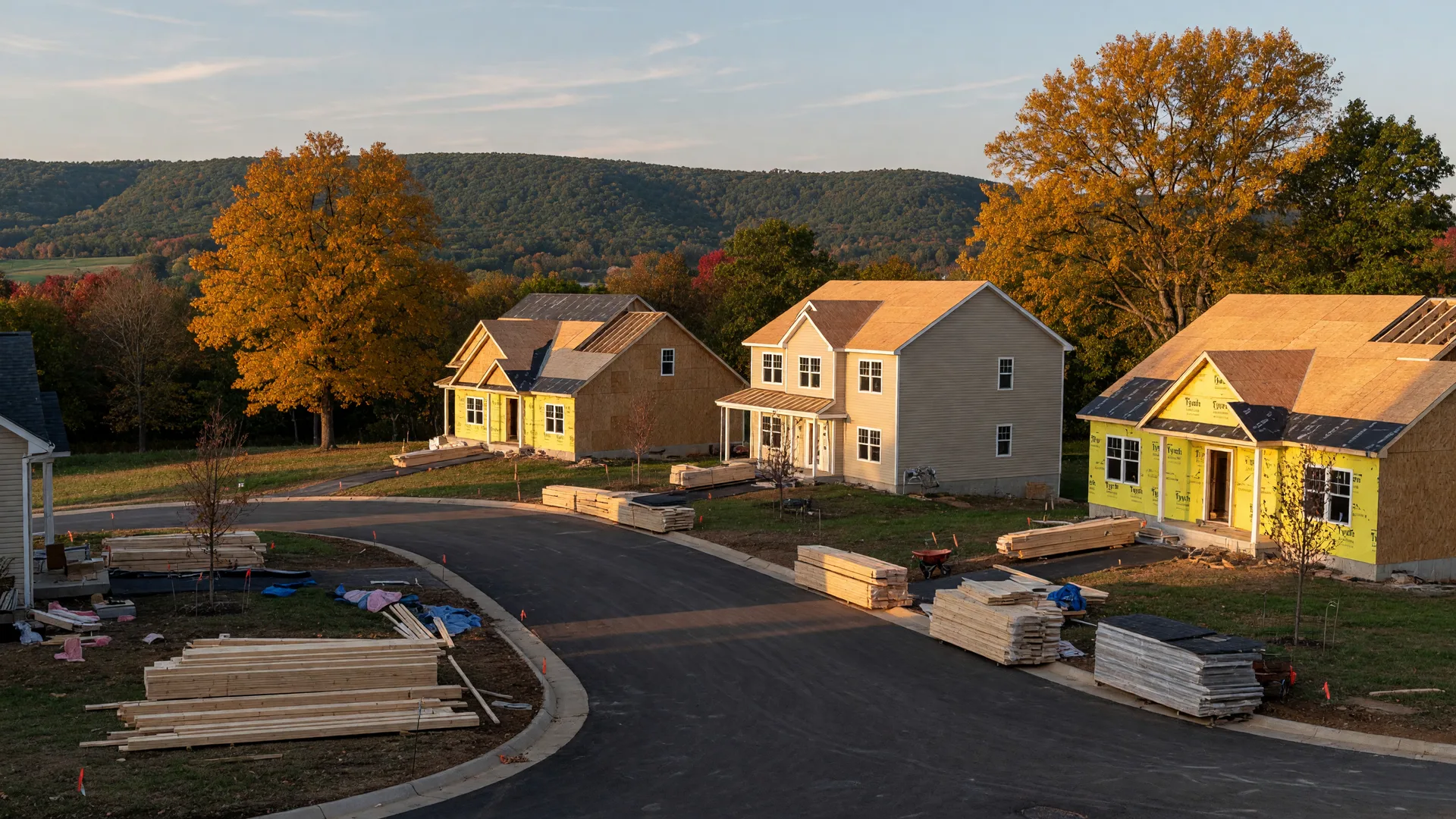
Lehigh Valley New Construction
The buyer's guide to building in Northampton, Lehigh, and Carbon Counties, Pennsylvania: what to know before you build, smart questions to ask builders, and what to watch in contracts, timelines, and inspections.
Why this hub exists
This is the Lehigh Valley homebuyer's practical resource for new construction in Northampton, Lehigh, and Carbon Counties, Pennsylvania. It covers what to know before you build, smart questions to ask any builder, what to watch for in contracts, timelines, and inspections, and the costs you should verify against dated local data and property-specific documents before you sign.
The guidance comes from Tim Tepes, a Pennsylvania Licensed Associate Broker with more than 36 years in the Lehigh Valley market, and every cost item here is written as a question to verify, not a fact about today's market. Nothing on this page is a substitute for reading the actual contract, the actual warranty, and the actual numbers for the home you are considering.

Your New Construction Guide
Tim Tepes
Tim Tepes is a PA Licensed Associate Broker (license AB062628L) and the founder of Tim Tepes Real Estate LLC with Better Homes and Gardens Real Estate Cassidon Realty. Since 1990 he has helped more than 2,000 clients buy, sell, and invest in real estate, with 700+ documented transactions in the Lehigh Valley market.
He is a REALTOR and member of the Greater Lehigh Valley REALTORS (GLVR), a past president of GLVR, and an AI Certified Agent. New construction is one of his core specialties: he works with national and local builders across Northampton, Lehigh, and Carbon Counties, and reviews builder contracts, upgrade pricing, and inspection timing with every client.
Call or text Tim at (484) 275-0056, email timtepes@gmail.com, or book a free 30-minute consultation.
What homebuyers should know before building new construction in the Lehigh Valley
Register your own agent on the first visit
The sales agent in a builder model center works for the builder. Register your own agent from the very first visit, and that agent's duty runs to you from the first walkthrough to the final one. In Pennsylvania, buyer representation costs you nothing extra on most builder deals because the builder pays the buying agent's commission.
Know who builds and who inspects
Ask for completed communities you can drive through and homeowners you can talk to. Confirm that an independent inspector can be present at the pre-drywall stage and at the final walkthrough. The builder's own quality team and municipal inspectors are important, but an inspector who answers to you is different.
Know the community's rules before you sign
New Lehigh Valley developments commonly carry homeowners association (HOA) or community association fees. Get the governing documents, the current fee, what common areas and amenities they cover, and when the fees start. Rules on rentals, parking, fencing, and exterior changes can matter a lot after you move in.
Confirm the municipal status of the development
Ask whether the development's plans, approvals, and permits are final, what infrastructure is already in place (roads, sidewalks, sewer or water), and who completes the rest and by when. A community that is still working through municipal review carries more timeline risk than one already under construction.
Plan a realistic timeline
A build takes months, not weeks. Weather, municipal review, materials, and the availability of trades all move the start and finish dates. Treat the builder's estimate as a range, and plan your rent or lease, rate lock, and move date around the outer edge, not the optimistic one.
Budget beyond the base price
Upgrades, lot premiums, landscaping, fencing, window treatments, and sometimes even appliances are separate line items. Ask for a written total cost estimate for the home as configured, and compare builders on that number, not on the base price in the ad.
Understand the property tax picture
A brand-new home is often assessed at its finished value, which can make the first tax bill higher than the bills on older homes nearby. Ask the county assessment office and the township or borough how new construction is assessed in that municipality, and what the first and second year bills might look like for a comparable finished home.
Match the financing to the build
A construction-to-permanent loan covers the build and converts to a mortgage at completion; an end loan closes when the home is done. Rate locks matter because builds take months. Compare the builder's preferred lender against an independent lender line by line, including any incentives that are tied to using their financing.
Smart questions to ask builders
Print these and take them to the model center. The value is not in the asking, it is in getting answers in writing before you sign. Every question below matters more in new construction than in resale, because a builder contract is written to protect the builder.
What exactly is included at the base price?
What is the total price for the home I am describing, including lot, options, and upgrades?
When does my deposit become non-refundable?
What happens to the price if materials or labor costs change?
What is the estimated completion date, and what is the process if it slips?
Who is my day-to-day contact, and how are site visits handled?
What warranty is offered in writing, and how do I file a claim?
Can I have an independent inspector at the pre-drywall and final walkthrough?
What are the HOA or community association fees, what do they cover, and when do they start?
Does using the builder's preferred lender change my total cost?
What is included at move-in: landscaping, driveway, blinds, appliances, and window treatments?
What happens if the appraised value comes in below the contract price?
Want Tim in the room when you ask them? He attends model center visits with his buyers and reviews the answers line by line. Book a free consultation or call (484) 275-0056.
What to look out for in contracts, timelines, and inspections
Contracts
Escalation and price language
Some new-home agreements let the builder adjust the price if construction costs rise between signing and closing. Read the clause verbatim, ask for a cap, and get any fixed-price commitment in writing.
Deposits and earnest money
Confirm the amount, the refund schedule, and the exact milestone at which the deposit becomes non-refundable. Milestones like an approved loan or a signed change order can change your obligations.
Allowances, specs, and change orders
If finishes are described with allowances or up-to language, get the specification sheet attached to the contract. Every change should be a written change order with a price, signed by both parties, before the work happens.
Settlement and who runs it
Pennsylvania is not an attorney-closing state: settlement is typically run by a title company or settlement agent rather than an attorney-conducted closing like in some neighboring states. Confirm in writing who conducts the settlement, what title and recording fees apply, and who chooses the settlement agent.
Review before you sign
Builder agreements differ from resale purchase agreements and are written to protect the builder. Tim reviews the contract language alongside the sales presentation so you understand what you are committing to before the deposit changes hands.
Timelines
Build stages and duration
The typical sequence is site prep and foundation, framing, mechanical rough-ins (plumbing, electrical, HVAC), drywall, interior finishes, and the final walkthrough. Ask the builder for the current estimate for a home like yours, and allow months from contract to closing in the Lehigh Valley.
Municipal review can add time
If the development is still working through plans, permits, or infrastructure completion, the clock can start later than the sales center suggests. Ask what is approved, what is pending, and who carries the risk of a permitting delay.
Plan rate locks and lease renewals around the outer edge
Mortgage rate locks and apartment leases are the two commitments that hurt if a build runs long. Plan both around the outer edge of the builder's range, and ask whether the builder's lender offers an extended lock that starts closer to completion.
Inspections
Pre-drywall inspection
Once drywall is installed, the framing, rough plumbing, electrical, and HVAC are hidden for decades. An independent inspector at this stage checks the structure and rough-ins while problems are still cheap to fix.
Municipal sign-offs and certificate of occupancy
The township or borough inspects key stages and issues the certificate of occupancy before you move in. Ask what remains open at closing and whether any completion items are scheduled after you take the keys.
Final walkthrough and punch list
Before you accept the home, walk it with the builder's team and your agent, document every defect in writing with photos, and agree on a punch list with dates. The quality of this walkthrough sets the tone for your first year.
Year-one warranty follow-up
Settling cracks, paint touch-ups, and small hardware and appliance items tend to show up over the first year. Keep a running list with photos, submit it before the builder's deadline, and keep a copy of everything for your records.
The week-to-week reality
New construction rewards the buyer who stays involved. Visit the site at different stages, keep every specification sheet and change order, photograph the pre-drywall stage, and write down every conversation with the builder's team. When a question is not in writing, it did not happen.
Tim coordinates pre-drywall and final inspections for his buyers, compiles the punch list letter before the one-year warranty deadline, and keeps a file of the contract, specs, and change orders so nothing depends on memory at closing or in year one.
Costs to verify: the numbers are property-specific
No two new homes cost the same, and market figures change month to month. Treat every item below as a question to verify against dated local data or the written documents for your specific property, never as a fact about today's market. Tim's rule for his own clients: the number in writing beats the number in conversation, every time.
Base price vs. total cost
Request a written itemization of the exact home: base price, lot premium, options, upgrades, and any change orders. Compare builders on that total, never on the advertised base.
Closing and settlement costs
Ask for a written estimate of title insurance, transfer and recording fees, lender fees, and any settlement charges from the title company. Pennsylvania settlement is typically run by a title company or settlement agent.
Property taxes after completion
New construction is often assessed at the finished value, which can change the tax bill meaningfully in the first year or two. Ask the county assessment office and the local taxing authorities what to expect for a comparable completed home in that municipality.
HOA or community association fees
Get the current fee, what it covers, whether there is a capital or reserve contribution at closing, and how fees can change after the association turns over to residents.
Insurance at both stages
A house under construction is insured differently than a finished occupied home. Compare quotes for both stages and confirm who carries the builder's risk policy during construction.
Utilities, connections, and municipal items
Sewer or water tap fees, electric and gas connection charges, and any municipal improvements can be separate line items. Ask which ones apply in that municipality and who pays them.
Landscaping, driveway, and common area work
Confirm what is completed before closing, what is scheduled after closing, and what is not included at all. Delayed or incomplete site work is one of the most common post-closing surprises.
Financing cost
Compare the builder's preferred lender against an outside lender on points, origination, rate lock fees, and any incentive strings. A low advertised rate can be offset by fees or a weak lock policy.
Market data
Any median price, days on market, or cost-per-square-foot figure changes over time. Verify figures against a dated source: the Greater Lehigh Valley REALTORS market update and Tim's current market reports are a good place to start.
Buying as an investor?
If you plan to rent the finished home out, residential rental real estate depreciates on a 27.5-year schedule for federal tax purposes, and there is no universal cap rate or cash-on-cash return that applies to a new build. Run the numbers for the specific property with your tax adviser. The site's New Construction Investment hub walks through underwriting a build with your own figures, each answer sourced.
Use the Underwriting ChecklistGo deeper: resources and dated references
New Construction Homes, the specialist guide
National and local builders, upgrade guidance, pre-drywall inspection, warranty, and negotiated incentives with Tim at your side.
Read moreNew Construction Investment hub
For buyers who plan to rent or resell: underwriting, financing, ongoing costs, and risks, each with a cited source.
Read moreNew Construction Tracker
A monthly roundup of what is being built across the Lehigh Valley, with the source behind every item.
Read moreGLVR Market Update, July 2026
The Greater Lehigh Valley REALTORS market report, the dated reference for regional housing figures.
Open documentNew Construction Investment Guide
A downloadable guide to new-construction investing in the Lehigh Valley.
Open documentCommunity guides
All of the site's Lehigh Valley community pages, covering Northampton, Lehigh, and Carbon Counties.
Read moreSchool district pages
Official school district information for the districts that serve these communities.
Read moreTim Tepes Services
A one-page overview of Tim's buyer, seller, investor, and specialty services across the Lehigh Valley.
Open documentQuestions we hear most about new construction
Why should I bring my own agent to a new construction community?
How long does new construction take in the Lehigh Valley?
Are new construction homes in Pennsylvania covered by a warranty?
What is a pre-drywall inspection, and why does it matter?
Do I need an attorney to close on a new home in Pennsylvania?
Can I negotiate with a builder on price and incentives?
Have a different question? Ask Tim directly, call (484) 275-0056, or text (484) 275-0056.
Tell Tim which builder you are considering
Send the community or builder on your list and Tim will reply with what to watch for. No pressure, no spam. He personally reads every message.
How to read this page
This is educational guidance, not legal, tax, or appraisal advice. Pennsylvania does not mandate a written new-home warranty by statute, so warranty coverage is whatever the builder's written contract provides, alongside the implied warranties recognized by Pennsylvania law. Market figures, builder incentives, loan terms, taxes, insurance, community fees, and construction schedules change; verify every number against dated, property-specific sources and qualified professionals before you act. Tim Tepes is a licensed Associate Broker in the Commonwealth of Pennsylvania (PA License #AB062628L), affiliated with Better Homes and Gardens Real Estate Cassidon Realty, and a member of the Greater Lehigh Valley REALTORS. Equal Housing Opportunity. REALTOR.