2026 Relocation Guide · Northampton, Lehigh & Carbon Counties, PA
Living in the Lehigh Valley, PA (2026 Guide)
The honest, local guide to what it is really like to live here: the market, the communities, the schools, the commutes, and the trade-offs, from Tim Tepes, who has worked the Valley for 36+ years.
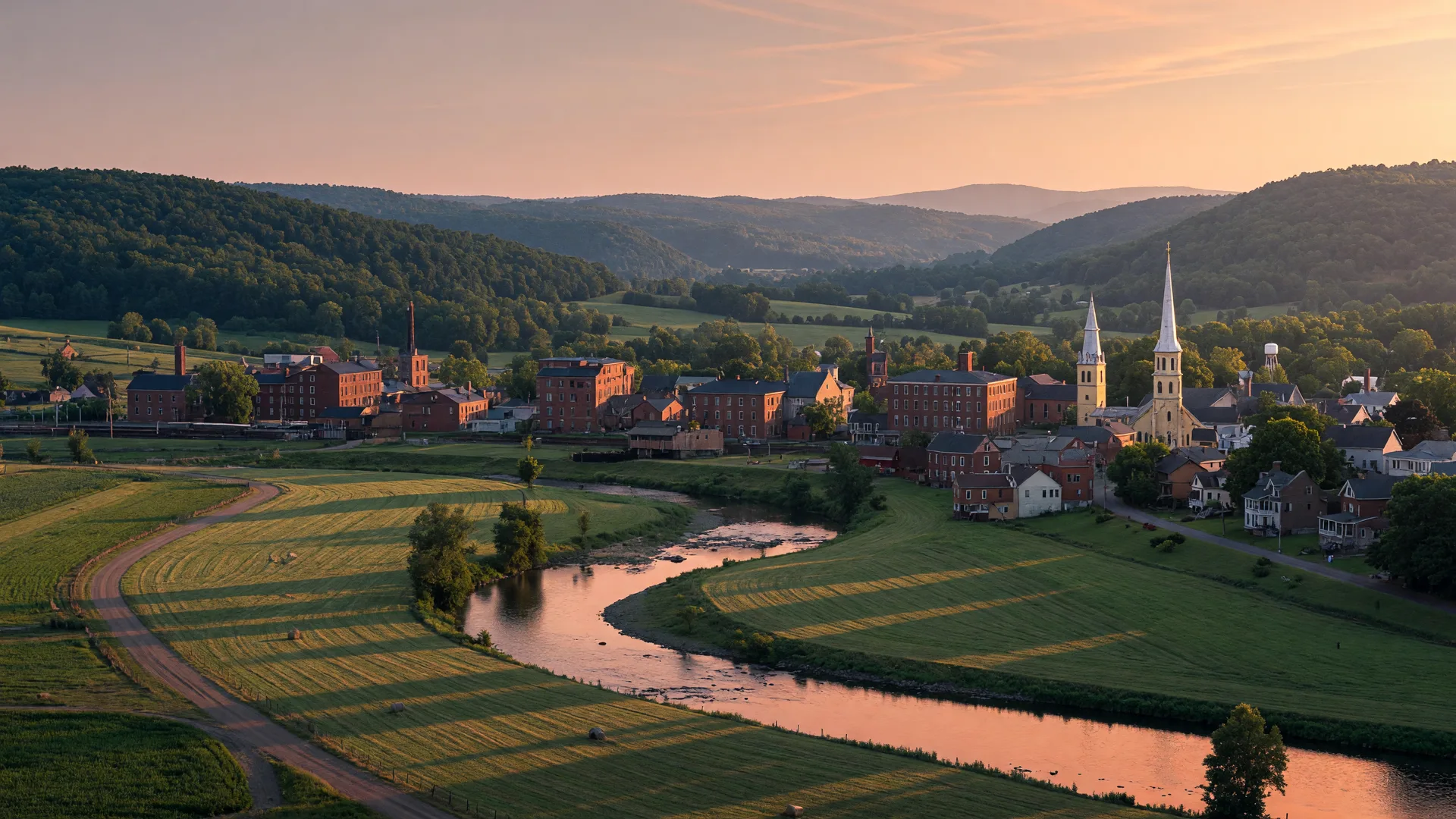
The Lehigh Valley is a two-county region of more than 700,000 people in eastern Pennsylvania, about 80 miles from New York City and 60 miles from Philadelphia. It is really three cities in one metro (Bethlehem, Allentown, and Easton) surrounded by dozens of walkable boroughs, corn-and-soybean farmland, and fast-growing suburban townships. This guide explains what living here actually feels like, using dated market data where it exists and honest, check-it-yourself guidance everywhere else.
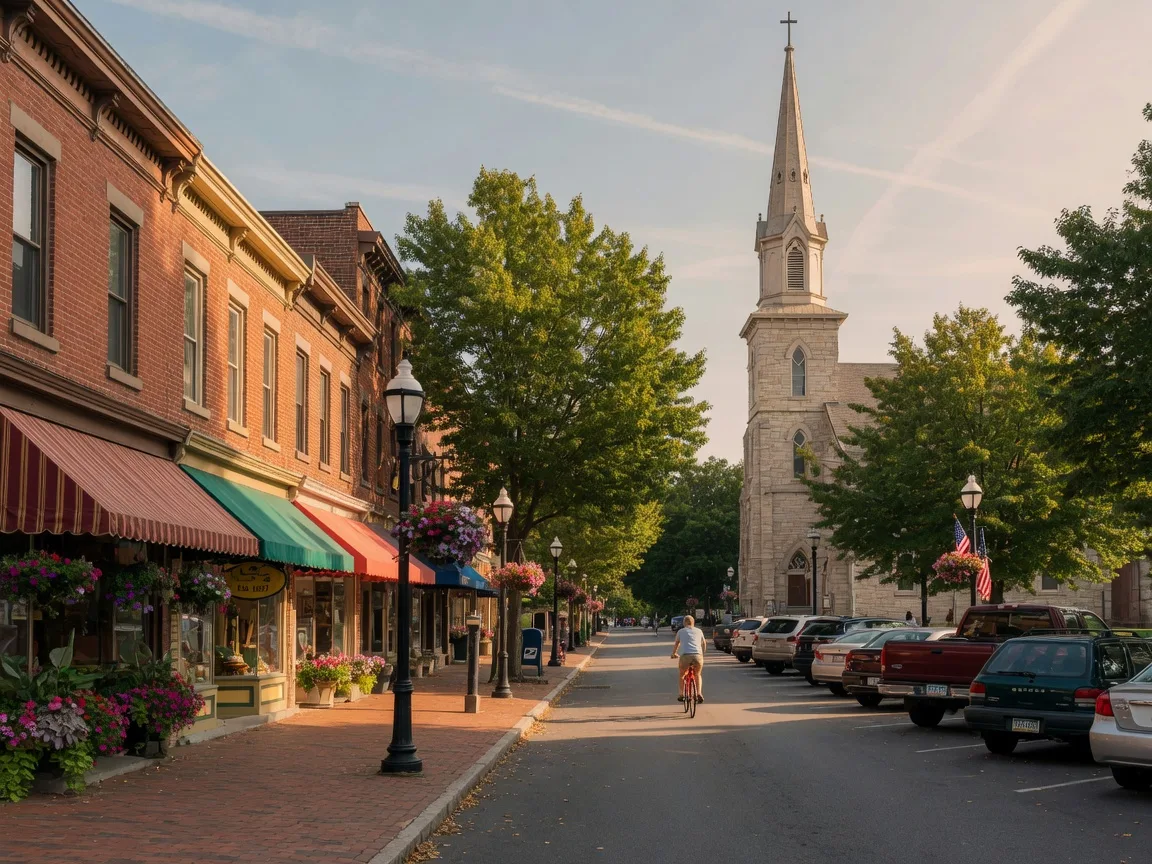
The personality is split in the best way. Bethlehem keeps its Moravian stone houses and its steel-mill past alive at SteelStacks, with a year-round calendar of concerts, farmers markets, and festivals like Musikfest. Allentown is the working city, with a reborn downtown around the PPL Center, museums, and one of the best park systems in the state. Easton pairs a preserved 18th-century Centre Square with Lafayette College energy and a serious food scene. Twenty minutes from any of them, you are in farm country watching the seasons roll across the hills.
The economy is anchored by healthcare, with Lehigh Valley Health Network and St. Luke’s University Health Network operating hospitals and campuses across the region, plus manufacturing, medical devices, logistics, and a growing distribution sector along the I-78 corridor. The airport (ABE) sits right in the middle of the Valley, and Route 22, I-78, Route 33, Route 309, and the PA Turnpike Northeast Extension ring the whole area.
The trade-offs are real: this is a car-dependent region, winters are genuinely snowy, and property taxes are a meaningful part of every monthly payment. Get past those three and you land on a place where a household can buy a real home, a commuter can reach two metros, and a weekend can still mean a hike at Blue Mountain. Tim keeps every neighborhood and price point below current and honest, and he confirms the specifics on every call.
The Numbers That Matter
Lehigh Valley at a glance, 2026
The market figures below come from the most recent dated Greater Lehigh Valley REALTORS (GLVR) market report, which covers Lehigh and Northampton Counties together. Where a figure needs a dated source that does not exist yet, the guide says so plainly instead of guessing.
$379,000
Lehigh Valley median home price, up 9.2% year over year (GLVR, August 2026 Market Update)
+3.2%
Closed sales, up year over year across Lehigh and Northampton Counties (GLVR, August 2026)
80 miles / 60 miles
About 1.5 to 2 hours from NYC on I-78 and about an hour from Philadelphia
700,000+
Residents across Lehigh and Northampton Counties, in the region Tim serves
Income needed to buy and cost-of-living comparisons: no dated, citable local source for a 2026 income-to-buy figure is available to this guide, so instead of inventing one, check current figures with a lender and with GLVR’s latest report. Qualifying income depends on rates, down payment, debts, and taxes, and rates move weekly.
The Housing Market
New construction vs. resale, and everything in between
Per the most recent broadly published GLVR market report, the Lehigh Valley median home price was $379,000, up 9.2% year over year, with closed sales up 3.2% and inventory still well below a balanced market. Here is what that looks like on the ground, by housing type:
Historic resale
Colonial-era boroughs like Bethlehem, Nazareth, and Catasauqua offer stately older homes, rowhomes, and mid-century bungalows. Many need no more than tasteful updating, and a few need true restoration, so budget matters as much as the sticker price.
New construction
The outer townships, especially in Lehigh County, are where most new development is happening: single-family neighborhoods on former farmland, townhome communities, and a growing number of 55+ and maintenance-free options. Build times, lot premiums, and upgrades all add cost beyond the base price.
Townhomes and condos
The Valley has a solid supply of townhomes and condos, from newer communities near shopping corridors to converted mills and lofts in the cities. HOA and community fees vary widely, so read the budget before you commit.
Farms and acreage
The northern tier of Northampton County and the western townships of Lehigh County still offer farms, hobby properties, and lots with room for animals or gardens. These move at their own pace and price on a case-by-case basis.
Buyers should know
Be pre-approved before you search, expect competition on well-priced homes, and look beyond the city limits: the same budget buys more house in a surrounding township.
Closing costs
Pennsylvania adds a realty transfer tax of 1% state plus 1% local in most of the Valley (2.5% inside Allentown), so budget roughly 2% to 2.5% on top of the price for that line item alone.
Sellers should know
Demand is steady and days on market are short, but pricing still decides the outcome. Homes priced against recent comparable sales sell; overpriced homes sit even in a tight market.
Communities & Neighborhoods
Fifteen places worth knowing, on one page
The Lehigh Valley is really fifteen distinct areas in one region. Each snapshot below gives the honest one-paragraph read plus where prices generally sit relative to the dated regional median. Every linked name opens that town’s full community guide.
Bethlehem
Northampton and Lehigh Counties
The Christmas City pairs a walkable 18th-century Moravian core with the revitalized SteelStacks campus and solidly suburban neighborhoods. It has two school district boundaries (Bethlehem Area and Saucon Valley in parts of the south side), so verify the exact assignment by address. Price context: well above the regional median in historic districts and near-median in much of the township.
The county seat and the Valley’s economic anchor, with rowhomes, grander older homes, and a changing downtown around the PPL Center. Allentown city schools serve the city, while addresses north of the city line often feed Parkland. Price context: entry points well below the regional median, with new condo inventory downtown.
The historic county seat at the junction of the Delaware and Lehigh Rivers. Its compact downtown, college-town energy from Lafayette, and riverfront parks define the feel, while Palmer and Forks just outside the city limits hold most of the newer single-family housing. Price context: city prices below the regional median, with suburban neighborhoods nearby.
The borough of Northampton, once called The Cement Capital of the World, sits along the Lehigh River between Allentown and Easton; the local Atlas Portland Cement Company supplied much of the concrete for the Panama Canal. Walkable main-street blocks, the Northampton Area School District, and easy access to Route 22 make it a steady first-time buyer draw. Price context: typically priced below the regional median.
A dense, convenient corridor with the Lehigh Valley Mall, big-box retail, and solid mid-century neighborhoods served by the Whitehall-Coplay School District. It is one of the most central commuter locations in the Valley. Price context: a wide range, with many homes below the regional median.
Emmaus, Macungie, and Alburtis share the well-regarded East Penn School District and a small-town Main Street reputation with growing inventory around them. If schools lead your list and you want town character, start here. Price context: several points above the regional median in the most sought-after corners.
The Moravian borough that is home to the Martin Guitar factory, with a strong school district and an easy Route 22/191 position. Newer development rings the historic core. Price context: broadly in line with the regional median, with a wide spread by neighborhood.
The Parkland School District footprint covers North Whitehall, South Whitehall, and Upper Macungie Townships and is the most sought-after school boundary in the region. Expect established subdivisions, newer construction, and country-lane pockets. Price context: premiums over the regional median are common.
Hellertown and Lower and Upper Saucon Townships offer a respected school district, the Promenade Shops, and country settings with I-78 access. Price context: generally at or above the regional median depending on the neighborhood.
A small borough with two National Register historic districts, a tight-knit community, and easy access to Allentown and Bethlehem. The Catasauqua Area School District also covers parts of Hanover Township in Northampton County. Price context: entry points below the regional median.
Coopersburg, Upper Saucon, and Lower Milford make up the Southern Lehigh corridor, closer to Philadelphia than most of the Valley with a top-notch district, parks, and rural edges. Price context: premiums over the regional median in most of the corridor.
The northern reach of Lehigh County, including Slatington and rural townships, offers the lowest price points in the county along with mountain and river recreation. Price context: the most accessible entry points in Lehigh County.
Heidelberg, Lowhill, Lynn, and Weisenberg Townships, a 100+ square mile corner of the county with farmland views, horse properties, and a respected rural school district. Price context: land values and estate properties vary widely; check current figures.
The two biggest townships outside Easton (plus Bethlehem and Hanover Townships in the same belt) anchor suburban living with excellent park systems and fast access to I-78 and Route 33. Schools split between Easton Area and Bethlehem Area, so address matters. Price context: solidly around the regional median with newer inventory.
Allen, East Allen, Moore, Lehigh, and Washington Townships plus Bath and Walnutport make up the rural northern tier at the foot of Blue Mountain. Bigger lots, farm views, Northampton Area or Nazareth Area schools, and the Appalachian Trail corridor are the draw. Price context: land-heavy or older homes often below the regional median.
Tim has helped 2,000+ clients find their fit across all fifteen of these areas, plus Carbon County. One 30-minute conversation about your schools, commute, and budget will cut this list in half.
In Pennsylvania, your street address, not the town name or ZIP code, determines your public school assignment. District boundaries cross borough lines all over the Valley, so always verify the assignment for the exact property before you write an offer. These are the major districts across Northampton and Lehigh Counties:
Bethlehem Area School District
Serves Bethlehem, Bethlehem Township, and parts of Hanover Township; one of the largest districts in the Valley.
These are honest typical drive times, not optimistic ones, and rush hour changes everything on Route 22 and I-78. Always test your actual route at the hour you would drive it.
Allentown
From boroughs like Northampton, Emmaus, or Catasauqua it is usually 10 to 15 minutes; from the far corners of the Valley about 30 to 40 minutes at rush hour.
Bethlehem
Central to almost everything: 10 to 15 minutes from Whitehall, Nazareth, or Allentown, and about 20 minutes from Easton at normal traffic.
Easton
About 15 to 20 minutes from Nazareth, Bethlehem, or the Route 33 corridor, and 10 to 15 minutes from Palmer and Forks.
Lehigh Valley International Airport (ABE)
From most Valley addresses, 10 to 20 minutes. That is the single biggest quality-of-life upgrade for travelers used to trekking to Newark, JFK, or Philadelphia.
The main corridors
Route 22 is the crowded east-west spine; I-78 is the fast east-west alternative to Jersey and NYC; Route 33 runs north to the Poconos; Route 309 heads south toward Philadelphia; and the PA Turnpike Northeast Extension (I-476) connects to the rest of the Turnpike system.
New York City
About 80 miles and usually 1.5 to 2 hours by car on I-78, with traffic. Trans-Bridge Lines motorcoaches run scheduled service to the city, and trains out of Trenton are an occasional option for the ambitious.
Philadelphia
About 60 miles and usually around an hour by car via Route 309, Route 22, and I-476, with traffic. A workable day trip for a ballgame, museum day, or airport run.
The Honest Trade-Offs
Pros and cons of living in the Lehigh Valley
Every place has trade-offs, and the Valley is no exception. Here is the balanced version Tim gives buyers on the first call:
What works
Affordability vs. the big metros
Homes cost a fraction of comparable properties in New Jersey, New York, or the Philadelphia suburbs, and the gap is the single biggest draw for out-of-state buyers.
Location between two metros
NYC and Philadelphia are both day-trip distance, ABE airport is 10 to 20 minutes away, and I-78, Route 22, and Route 33 make the region genuinely central.
Real community character
Three historic cities, dozens of walkable boroughs, a UNESCO World Heritage Moravian site in Bethlehem, festivals like Musikfest, and SteelStacks give the Valley a cultural calendar most areas its size cannot match.
Strong schools and two hospital networks
A dozen-plus school districts, several nationally recognized, plus LVHN and St. Luke’s anchoring care across the region.
Outdoor access
Blue Mountain, the Appalachian Trail, the Lehigh and Delaware rivers, state parks, and rail trails put real recreation within minutes of most addresses.
What to plan around
Car dependence
Outside the three city cores, almost everything requires a car. LANTA buses help in the cities, but there is no commuter rail station in the Valley today, so plan around driving.
Winter weather
Winters bring real snow, ice, and freeze-thaw cycles that pound the roads. Budget for winter tires or all-weather vehicles and a snow shovel, and expect occasional school delays.
Property taxes and local taxes
Property tax bills are high relative to many other states because school districts fund heavily through real estate taxes, and local earned income taxes run about 1% in most boroughs, higher in the cities. The total tax picture is rarely lower than the sticker prices suggest.
Traffic on the main arteries
Route 22 and I-78 are slow at peak hours, and the Valley has no real bypass around the congestion. Commute times swing hard with the clock.
A competitive market
Inventory is tight and well-priced homes draw multiple offers, so buyers need to be pre-approved, decisive, and patient.
People Also Ask
Living in the Lehigh Valley: quick answers
What is the best suburb in the Lehigh Valley?
There is no single best suburb, because the right answer depends on your schools, commute, and budget. Parkland and Southern Lehigh lead most school-first buyer lists, Whitehall and Catasauqua are central and reasonably priced, and Nazareth and East Penn blend character with growth. Tim helps you narrow the list to the two or three that actually fit your life.
What do Lehigh Valley schools, parks, and housing offer?
The region offers respected school districts, suburban townships, parks and recreation, children’s museums and the zoo, and a cost profile that lets many households afford a home and a yard on one solid income. There is no single district that fits everyone, so weigh the assignment that your exact address feeds.
How far is the Lehigh Valley from NYC?
The Valley is about 80 miles west of New York City, usually a 1.5 to 2 hour drive on I-78 with traffic. Trans-Bridge Lines runs scheduled motorcoaches from the Valley to the city, and NJ Transit buses connect the Easton area into New Jersey.
What are property taxes like in the Lehigh Valley?
Property taxes are a real cost to budget for because Pennsylvania school districts fund largely through real estate taxes. The bill combines school district, county, and municipal portions, and it varies a lot by district, so two similar homes a few miles apart can carry very different annual taxes. Millage and assessment questions are worth asking before you fall in love with a house.
What is the median home price in the Lehigh Valley?
Per the most recent broadly published Greater Lehigh Valley REALTORS (GLVR) market report, the August 2026 update, the Lehigh Valley median home price was $379,000 across Lehigh and Northampton Counties, up 9.2% year over year, with closed sales up 3.2% and active inventory up 8.2%. County and town figures move monthly, so check the current report before you price a home.
Are homes selling fast in the Lehigh Valley?
Well-priced, well-presented homes are. The latest GLVR data shows closed sales up 3.2% year over year, and active inventory remains well below the level that marks a balanced market, so competition is common in the most desirable neighborhoods. Be pre-approved and ready to move quickly.
Which school districts serve the Lehigh Valley?
More than a dozen districts serve the two counties, including Bethlehem Area, Allentown, Easton Area, Parkland, Northampton Area, Whitehall-Coplay, Saucon Valley, Nazareth Area, Southern Lehigh, Catasauqua, East Penn, Northern Lehigh, Northwestern Lehigh, Salisbury, Bangor Area, Pen Argyl Area, and Wilson Area. Your street address, not the town name, decides the assignment.
Do I need a car to live in the Lehigh Valley?
Almost certainly yes. The three cities have walkable stretches and LANTA bus service, but the suburbs and boroughs are built around driving, and there is no commuter rail station in the Valley today. A car is the practical baseline for almost every household.
Is the Lehigh Valley a good place to invest in real estate?
The Valley has long drawn investors for its steady demand, strong rental culture near the colleges and hospitals, and prices still far below the nearby metros. Every deal still stands on its own numbers, so Tim reviews the rent, taxes, insurance, and HOA or community fees for each property before you commit.
What is the Lehigh Valley known for historically?
Bethlehem was home to Bethlehem Steel, and its preserved Moravian settlement is a UNESCO World Heritage site. Easton’s Centre Square was one of the first places the Declaration of Independence was read publicly, Allentown sheltered the Liberty Bell in 1777, and the Slate Belt towns quarried much of America’s roofing slate.
How is the healthcare in the Lehigh Valley?
Strong. Lehigh Valley Health Network (LVHN) and St. Luke’s University Health Network both operate hospitals, emergency departments, and outpatient campuses across the region, so most residents live within a short drive of primary care, urgent care, and a hospital.
Should I buy or rent when moving to the Lehigh Valley?
It depends mostly on your timeline. Buying rewards people who will stay several years, while renting makes sense for shorter horizons or while you learn the neighborhoods. There is no universal right answer, and one honest conversation about your plans will point you to the right one.
36+ years in the Valley, and still answering questions like a neighbor
Tim Tepes is a PA Licensed Associate Broker and REALTOR® with more than 36 years of experience serving the Lehigh Valley, and the founder of Tim Tepes Real Estate LLC with Better Homes and Gardens® Real Estate Cassidon Realty. Since 1990 he has helped more than 2,000 clients buy, sell, and invest, with 700+ documented transactions across Northampton, Lehigh, and Carbon Counties.
He specializes in residential resale, new construction, investment properties, probate and estate sales, downsizing, and small multifamily assets, and he has served as President of the Greater Lehigh Valley REALTORS®. The pages on this site are his honest local answers, built on dated public data and 36 years of block-by-block experience.
Whether you are moving from down the street or across the country, Tim Tepes can help you find the community, school district, and home that fit your life. It starts with a free, no-pressure conversation.
Join the list for early access to new Lehigh Valley homes, market updates, and insider tips from Tim Tepes. Be the first to know when properties hit the market. New listings sell fast, so don’t wait.