Lehigh Valley New Construction in Late 2026: Costs, Communities, and Questions to Ask a Builder

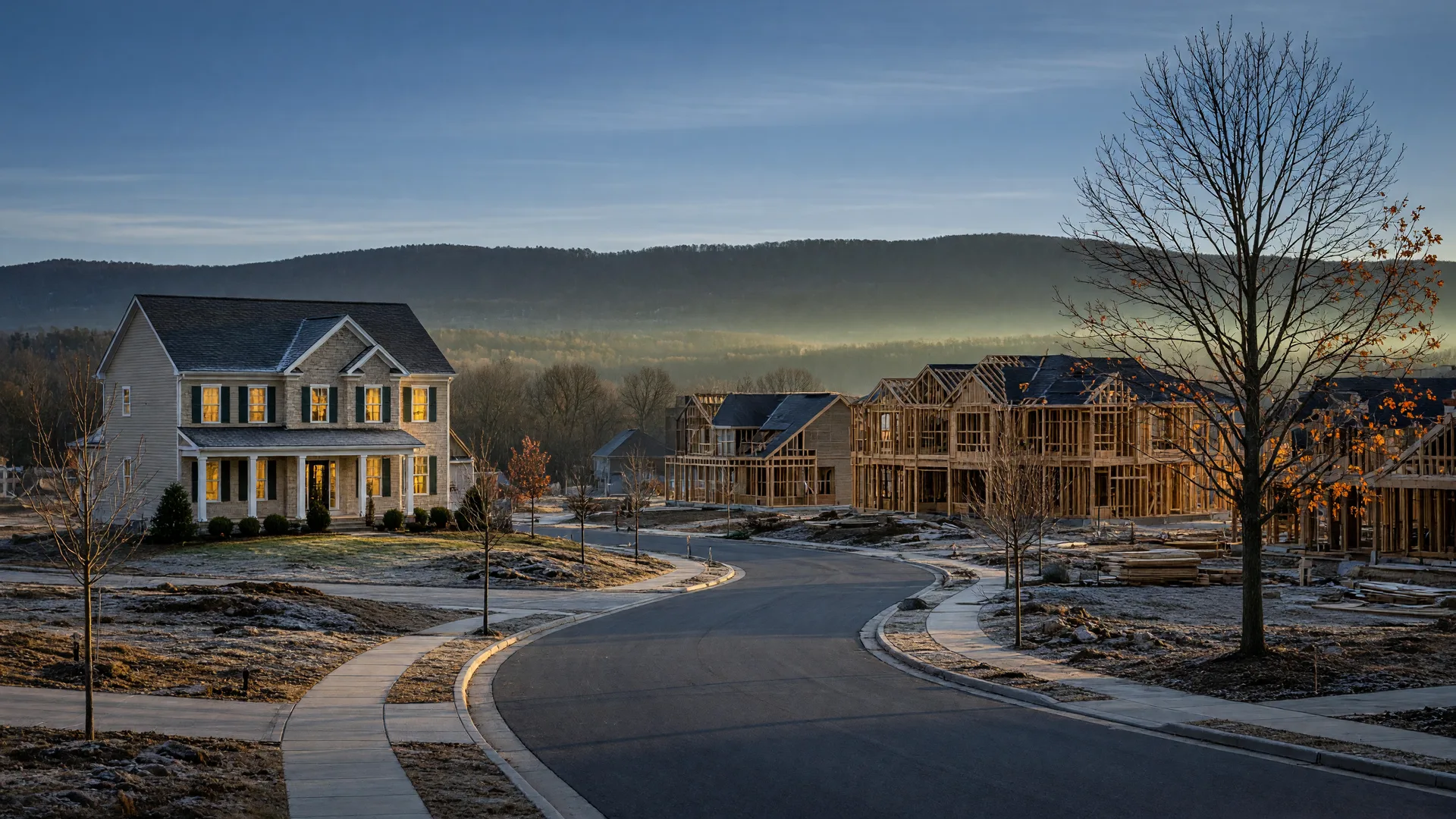
New construction is still one of the fastest-moving parts of the Lehigh Valley housing market heading into late 2026, and buyers who understand the real numbers make better decisions than buyers who react to ads. This post covers the communities currently selling in Northampton, Lehigh, and Carbon Counties, what a new build actually costs beyond the base price, realistic timelines, the builder incentives available right now, and the contract, inspection, and community questions worth asking before you sign. Every figure below is verified against a linked source as of November 20, 2026, and where a number is a range, a plan price, or a rule of thumb, it is labeled as one.
The Late-2026 Context: Rates, Inventory, and Why Builders Are Incentivizing
The financing picture matters more to new-construction buyers than almost anything else right now. The average 30-year fixed mortgage rate was 7.28% for the week ending November 19, 2026, up from 7.11% the prior week and compared with 6.26% a year earlier, per the Freddie Mac Primary Mortgage Market Survey. On the resale side, the most recent Greater Lehigh Valley REALTORS report (October 2026) shows a Lehigh Valley median sales price of $350,000, unchanged year over year, with inventory up 20.4% to 1,028 units, a 1.9-month supply, and homes averaging 22 days on market, per the GLVR market trends page and my October market update.
That combination explains the year-end incentive season. Nationally, Realtor.com's new-construction report found builders offering rate and down-payment incentives of nearly a full point, and major builders including D.R. Horton, PulteGroup, and Taylor Morrison have expanded rate buydowns to keep monthly payments in reach, per Realtor.com's coverage and National Mortgage News. Local builders are following the same playbook, with several current Lehigh Valley offers detailed below. The takeaway: when a builder advertises a buydown or credit, the terms, eligibility, and end date are what matter, and those change month to month.
Where New Homes Are Being Built Right Now
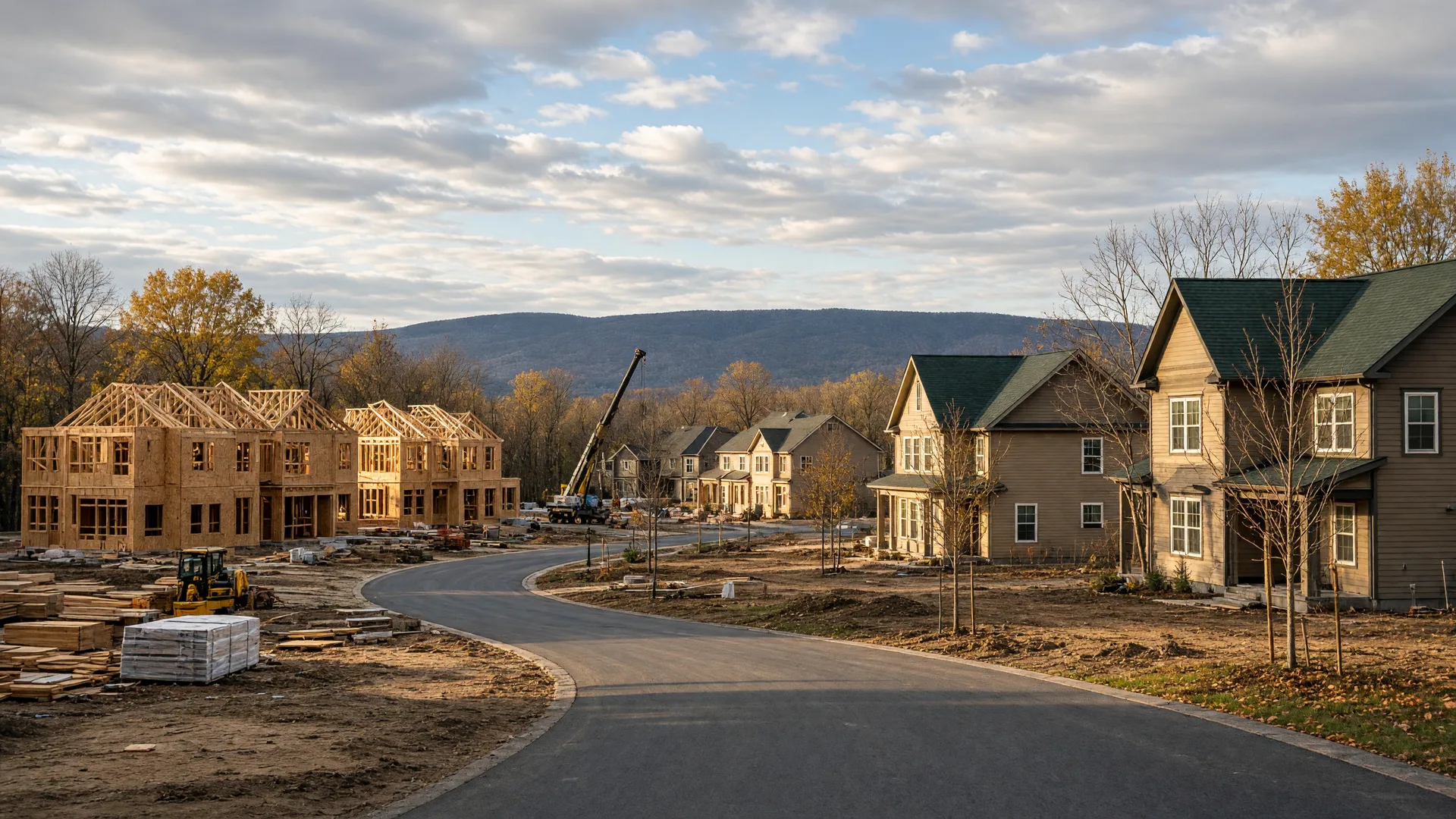
Buyers weighing a new build have real, current options across all three counties. These are communities verifiable from builder pages, listings, and municipal coverage as of this writing; prices change by phase, so treat every figure as a starting point and confirm it with the sales office.
Northampton County
- Lafayette Hills, Forks Township (D.R. Horton). A coming-soon community off I-33 and I-78 with single-family homes from the low $500,000s and twin homes from the low $400,000s, with sales offices at 1000 Meco Road and 266 Winding Road. See the Realtor.com community page and Zillow's Lafayette Hills page.
- Winding Road, Forks Township (D.R. Horton). To-be-built Galen and Penwell plans listed around $584,490 to $585,800, with delivery estimated for spring or summer 2027, per the current listing at 135 Winding Road.
- The Fields at Farmersville, Bethlehem Township (Kay Builders). Earth-moving began in October 2026 on the former Miller Farm off Farmersville Road, with the plan scaled from 166 to 108 single-family homes, per Lehigh Valley News Briefs.
- Willow Ridge Estates, Northampton Borough. A new single-family community at 600 Savage Road, with 2026 builds listed around $769,629 to $831,216, per the Devonshire plan listing.
- Overlook Estates, Nazareth area. Phase 2 is now selling, with homes listed from about $769,900 to $1,004,900, per the Homes.com community listing.
- Russell Gardens, Northampton Township. An 18-home single-family redevelopment of the former Russell Gardens Center on New Road, approved January 28, 2026, per Patch's coverage.
Lehigh County
- Arabella Reserve, Fogelsville (Lennar). Lennar describes it as Fogelsville's newest enclave of estate-style residences, debuting soon; a move-in-ready Savanna Farmhouse at 8435 Haaf Street was listed at about $995,275 with an open house on November 20, 2026, per the listing.
- Wrenfield, Fogelsville (D.R. Horton). Parkland School District townhomes with finished basements, listed from about $444,990 to $466,990, per the Homes.com community listing.
- The Cove at Millbrook, Lower Macungie Township (Tuskes Homes). A coming-soon Tuskes community on Sauerkraut Road in Macungie, with plans from about 2,162 to 3,763 square feet, per NewHomeSource.
- Views at Fells Creek, Schnecksville (Keystone Custom Homes). Announced in August 2025 as Keystone's first Lehigh County community in the Northwestern Lehigh area, per Lehigh Valley Business.
Carbon County
- Sage Meadows, Mahoning Township. A new 10-lot cul-de-sac subdivision with to-be-built homes, including a spec home listed around $585,800, per the Sage Court lot listing.
- Penn Forest Township. New to-be-built single-family homes in a lake community with five lakes and two pools, listed around $461,700, per the current listing.
This is a snapshot, not the full menu. My Where New Homes Are Being Built in the Lehigh Valley Right Now covers more communities in depth, and the New Construction Tracker reports the regional permit picture and project-by-project status. The most recent published permit data for the Allentown-Bethlehem-Easton metro shows 234 new private housing units authorized in July 2026, including 140 single-unit structures, per the Federal Reserve Bank of St. Louis permit series.
What a New Build Really Costs
The honest answer is that cost guides give you planning ranges, not quotes. Per-square-foot guides put a mid-range new single-family home in Pennsylvania near $200 per square foot, with the full range running from roughly $100 to more than $500 depending on finishes, site work, and complexity, per HouseBuildCalc and HomeGuide. Local custom-home builders report Lehigh Valley custom builds generally ranging from about $200 to $550 per square foot, with semi-luxury custom work commonly in the $300 to $400 range, according to Penn Contractors.
The number that matters is the total cost of the home as you configure it, not the ad price. Production builders quote a base price that can exclude a surprising amount: lot premiums for corner lots or views, upgrades, finished basements, landscaping, fencing, window treatments, and sometimes even appliances. Compare builders on the written itemization for the exact home you are describing, and ask what the finished property taxes will be, because a brand-new home is often assessed at its finished value and the first bills can run higher than the bills on older homes nearby. Ask the county assessment office and the township or borough how new construction is assessed there.
Costs to Budget Beyond the Base Price
- Lot premiums and upgrades. Corner lots, views, and finished basements are common line items that push the total well above the base.
- Landscaping, fencing, and window treatments. Many new homes are delivered with these as separate options.
- Property taxes on the finished value. Confirm the first-year bill with the county assessment office before you commit.
- Homeowners association or community association fees. New Lehigh Valley developments commonly carry HOA or community association fees. Get the governing documents, the current fee, what it covers, and when it starts.
How Long Does a New Build Take?
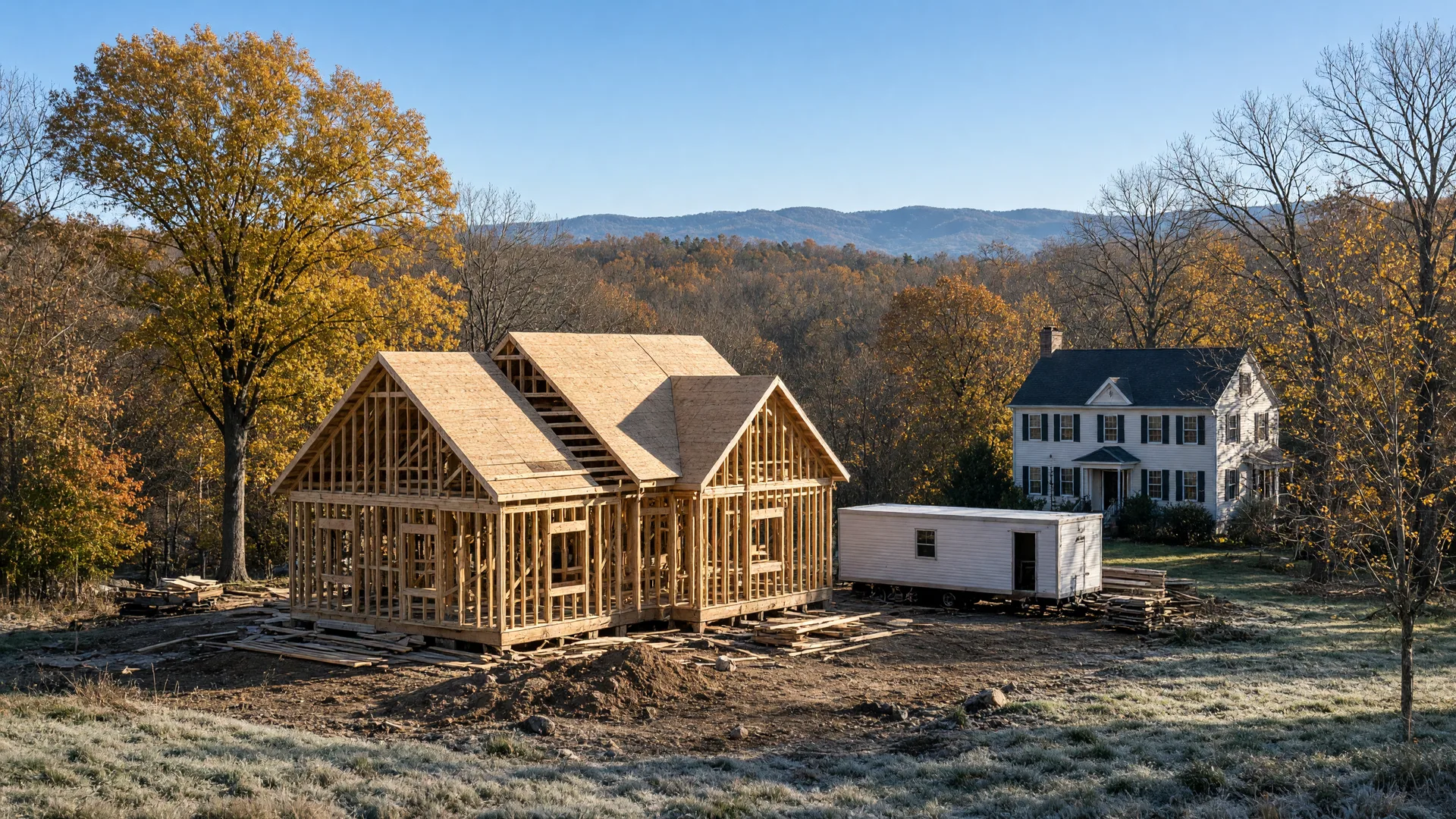
According to the U.S. Census Bureau's Survey of Construction, single-family homes built for sale average about 7.6 months from start to completion, while contractor-built homes average about 11.9 months. In practice, production builder homes in the Lehigh Valley commonly run about 6 to 10 months from contract to closing, semi-custom runs roughly 10 to 14 months, and a full custom build can take 12 to 18 months or more, per industry timeline guides including Segal & Morel, a PA and NJ custom builder.
The current listings prove how wide the delivery window can be: the to-be-built homes at Winding Road in Forks Township are advertising delivery for spring or summer 2027, which means a contract signed this month points to a move roughly six to nine months out. Weather, municipal review, building permits, and the availability of materials and trades all move that window. Plan your current lease, mortgage rate lock, and move date around the outer edge of the builder's range, not the optimistic middle.
Current Builder Incentives and How They Work
Incentives are time-limited and usually require the builder's preferred lender, so confirm terms, eligibility, and end dates with each community's sales office. These are the offers verifiable from builder pages as of publication:
- Ryan Homes: temporary interest-rate buydown. At Lehigh Valley-area communities such as Amherst Village, Ryan is advertising a temporary rate buydown, for example 5.125% in year one, 6.125% in year two, and 7.125% in years three through thirty on the Lehigh plan from about $636,990. Ryan builds in Fogelsville, Whitehall, Catasauqua, and Northampton. Ryan Homes Amherst Village plan.
- K. Hovnanian Homes: Sunny Slope Crossings, Bethlehem. Reduced pricing and special financing are advertised, with homes from the low $800s and quick move-in homes available. K. Hovnanian Lehigh Valley page.
- Berks Homes: Hometown Heroes and savings. A $2,500 Hometown Heroes incentive toward closing costs or a price reduction for licensed healthcare workers, teachers, first responders, and military families, a $500 homeowner referral reward, savings up to about $15,000 on select communities, and 50% off selection-gallery options in select communities. Berks Homes promotions page.
- Tuskes Homes: rate or credit. A 4.99% rate or up to $10,000 in closing-cost credit through MCT Financial was being advertised for year-end, as covered in my late November Q&A.
A buydown lowers the rate for a set number of years, which is different from a permanent rate. Ask exactly how many years the discounted rate lasts, what the rate becomes after, who pays the points (the builder or the lender), and what the monthly payment would be in year one and after the buydown ends. Ask the same question for every competing offer so you compare apples to apples.
The Pennsylvania Contract: What to Watch For
Pennsylvania has no statutory requirement that a builder deliver a written new-home warranty, which makes the contract the single most important document in the deal. Under Elderkin v. Gaster (1972), Pennsylvania courts recognize implied warranties that a newly built home is constructed in a reasonably workmanlike manner and is fit for habitation, but the Pennsylvania Supreme Court held in Conway v. Cutler Group (2014) that the implied warranty protects only the original purchaser and does not extend to later buyers. The standard Pennsylvania Association of REALTORS new-construction Agreement of Sale commonly states that the seller makes no warranties other than those written in the agreement, which can disclaim the implied warranties if signed unedited, per LBM Law's buyer's warning. Ask for a written builder warranty that states exactly what is covered, for how long, and how you file a claim; typical Pennsylvania builder warranties follow a 1-2-10 structure, one year on workmanship and materials, two years on major mechanical systems, and ten years on major structural defects, per Garman Builders' PA warranty guide.
Two more contract points deserve attention. Builder deposits commonly run higher than resale earnest money, often about 5% to 10% of the price, and can become non-refundable at specific milestones, per PAR's deposit guidance; confirm in writing who holds the deposit, when it stops being refundable, and what happens to it if financing falls through or construction is delayed. And Pennsylvania's Home Improvement Consumer Protection Act caps deposits on home improvement jobs, but the law expressly excludes the construction of a new home, so that cap does not apply to a new-home purchase contract, per the PA Office of Attorney General's HIC Act summary.
Pennsylvania does not require an attorney at closing, but many Lehigh Valley buyers choose to have a real estate attorney review a builder's contract before signing, and on a document this dense that is often money well spent. Tim is not an attorney and does not give legal advice, but he can walk you through what to look for and recommend trusted local counsel.
Inspections: What the Township Checks and What You Should Check
Pennsylvania's Uniform Construction Code requires inspections of new residential construction by certified construction code officials, whether township employees or an approved third-party agency hired by the municipality, per 34 Pa. Code Chapter 403. The required stages include the foundation, the plumbing, mechanical, and electrical rough-in, the frame and masonry, the wallboard (pre-concealment) phase, and a final inspection. In municipalities that have opted out of enforcing the code, the state Department of Labor & Industry performs these inspections instead.
Here is the key distinction: municipal code inspections check minimum code compliance, not quality of workmanship. A pre-drywall inspection by an independent inspector you hire is the only chance to see what will be hidden behind the walls for the life of the house, and it should be scheduled after framing and the rough trades are done but before insulation and drywall go up, a window that is often only a few days, per Inspection Professionals' pre-concealment guide. Confirm in writing that the builder allows your inspector on site, and plan the schedule from the start. The final walkthrough before closing is your last chance to build the punch list, so go through the home room by room with the builder and get every item in writing.
Communities: HOA and Community Association Fees
Most new Lehigh Valley developments, from townhome communities like Wrenfield to amenity-heavy neighborhoods, carry homeowners association or community association fees. The question is not just how much the fee is today, but what it covers, how often it can rise, and what rules come with it. Get the governing documents before you sign, confirm whether the fee covers lawn care, snow removal, common areas, and amenities, and ask when the fee starts and whether there is a reserve fund for major repairs. Rental restrictions and pet rules can change the value of a home after you move in, so read the full declaration of covenants, conditions, and restrictions, not just the summary page.
Questions to Ask a Builder Before You Sign
- What is included at the base price, and what is the written total for the home as I am configuring it? Base prices can exclude basics, and the total is the number that matters.
- What is the realistic completion date, and what happens if it moves? Get the delivery window in writing, along with what the builder does if the date slips.
- When does my deposit become non-refundable? Know the exact milestone before you hand over money.
- What written warranty is included, what does it cover, and for how long? Ask for the terms in writing, not a verbal promise, and confirm whether it transfers if you sell.
- Can I bring an independent inspector to the pre-drywall stage and the final walkthrough? If the answer is no, that is a warning sign.
- What are the homeowners association or community association fees, what do they cover, and when do they start? Read the full governing documents and any rental or pet restrictions.
- What are the real property taxes on the finished home? Ask the county assessment office for a realistic first-year bill, since new construction is often assessed at finished value.
- How does the incentive work, who pays for it, and what is the payment in every year of the loan? Compare buydown offers year by year, not just on the advertised first-year rate.
- Do I own the land under the home? In a land-lease community you own the home but lease the lot, and the ground lease terms matter as much as the house itself.
Frequently Asked Questions
Is now a good time to buy new construction in the Lehigh Valley?
The conditions are genuinely mixed in late 2026: mortgage rates are back up to about 7.28% for the week ending November 19, while resale inventory is rising (1,028 units, a 1.9-month supply, per the GLVR October report) and builders are offering year-end incentives that did not exist earlier in the year. The right answer depends on your timeline, budget, and the specific community, not on a headline. Run the real numbers for the exact home and offer in front of you, and decide based on that.
Do I need a buyer's agent for a new build?
Builders' sales offices represent the builder, not you, and many communities only credit an agent commission if your agent is registered with the sales office on your first visit. An experienced buyer's agent who knows new-construction contracts, incentives, and inspections can review the terms, flag the deposit and warranty language, and help you compare the builder's financing against an outside lender. Register your agent before that first tour.
Are the prices in this post guaranteed?
No, and no honest source would claim otherwise. Plan prices and listings change by phase, incentives have end dates, and delivery windows shift. Every figure here links to a current source so you can verify it yourself, and the builder's sales office is the final authority on any price, fee, or timeline.
Whether you are comparing new construction against resale, trying to decode a builder's incentive offer, or ready to tour communities across Northampton, Lehigh, and Carbon Counties, Tim Tepes can help you make sense of the options. Call or text (484) 275-0056, email timtepes@gmail.com, or book a free consultation to talk through your next move. He is a PA Licensed Associate Broker with more than 36 years of experience in the Lehigh Valley market.

With Over 36 Years of Real Estate Experience and Over 2,000 Real Estate Transactions Since 1990, Tim Tepes is a trusted expert in Lehigh Valley real estate. Call or text anytime.
Related Articles
Never Miss a Story
Add me as a Preferred Source on Google to see more of my content in AI Mode and AI Overviews.
Add me as a Preferred SourceThinking About a New Build in the Lehigh Valley?
Tim Tepes helps buyers understand new-construction pricing, incentives, contracts, and timelines across Northampton, Lehigh, and Carbon Counties, PA.