Building a New Home in the Lehigh Valley: What Buyers Should Know in 2026

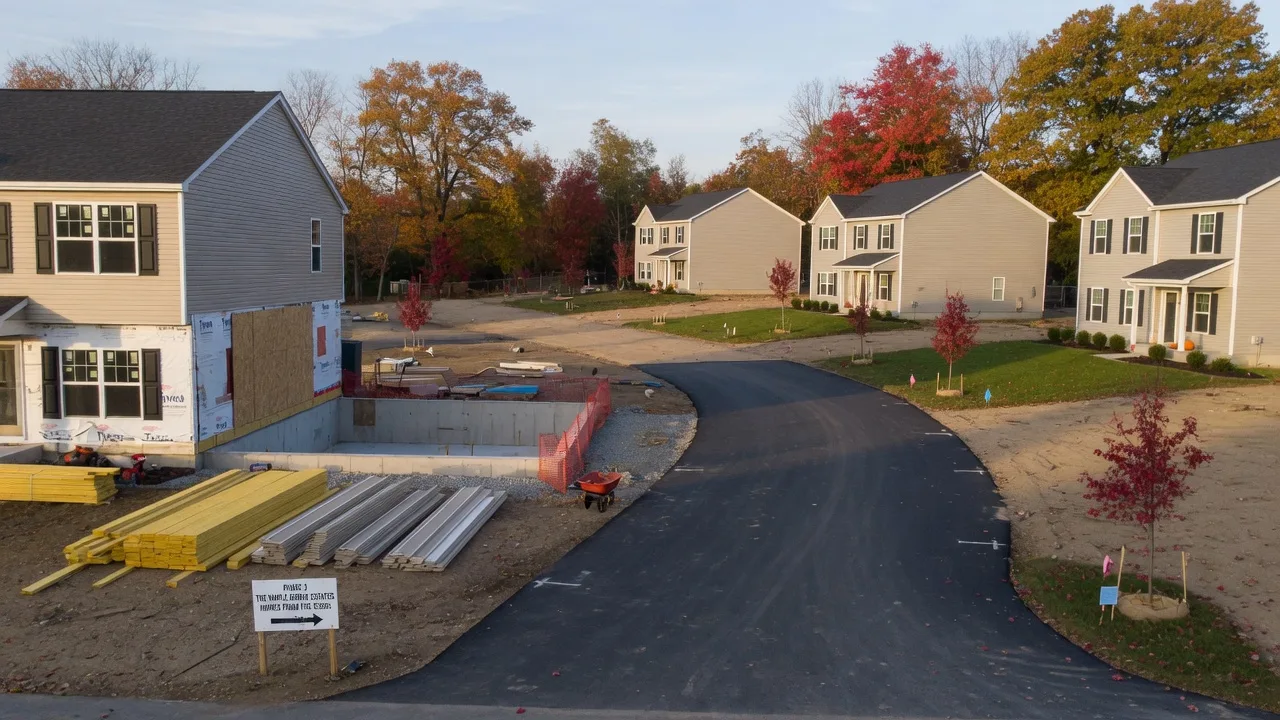
Building a new home in the Lehigh Valley can give you a house that fits your life exactly, but it is a different process from buying an existing property. This guide covers what buyers in Northampton, Lehigh, and Carbon Counties should know about the cost and timeline behind a new build, the Pennsylvania contract that governs it, the inspections that protect you, and the questions worth asking a builder before you sign. Every figure and rule here was verified against a current, linked source, and I note where a number is a range or a rule of thumb so nothing is overstated.
Why New Construction Is a Big Part of Today's Lehigh Valley Market
New homes are a growing slice of the Lehigh Valley housing picture because the region simply needs more supply. The Lehigh Valley Planning Commission's Housing Supply and Attainability Strategy, unveiled in August 2026, estimates the regional housing shortfall at more than 9,000 units and calls for adding more than 51,000 housing units region-wide. See the WFMZ coverage of the strategy and the Morning Call column on the building phase.
The permits tell the same story. The most current published data for the Allentown-Bethlehem-Easton metro area shows 234 new private housing units authorized in July 2026, including 140 single-unit structures, according to the Federal Reserve Bank of St. Louis permit series. For context, the most recent Greater Lehigh Valley REALTORS (GLVR) market data puts the Lehigh Valley median home price at $370,000, up 5.9% year over year, with homes selling in a median 19 days. Builders are adding the inventory that the resale market has not been able to provide on its own.
What It Costs to Build a New Home in the Lehigh Valley
Cost is the first question every buyer asks, and it deserves an honest answer with ranges, not a single number. Per-square-foot cost guides put a mid-range new single-family home in Pennsylvania near $200 per square foot, with the full range running from roughly $100 to more than $500 depending on finishes, site work, and complexity, per HouseBuildCalc and HomeGuide. Local custom-home builders report custom builds in the Lehigh Valley generally ranging from about $200 to $550 per square foot, with semi-luxury custom work commonly in the $300 to $400 range, according to Penn Contractors.
Treat those figures as planning ranges, not quotes. The number that matters is the total cost of the home as you configure it: base price plus lot premium, upgrades, landscaping, fencing, window treatments, and sometimes even appliances. Production builders quote a base price that can exclude a surprising amount. Ask every builder for a written itemization of the exact home you are describing, and compare builders on that total, not on the ad price.
Costs to Budget Beyond the Base Price
- Lot premiums and upgrades. Corner lots, views, and finished basements are common line items that push the total well above base.
- Landscaping, fencing, and window treatments. Many new homes are delivered with these as separate options.
- Property taxes on the finished value. A brand-new home is often assessed at its finished value, so the first tax bills can run higher than the bills on older homes nearby. Ask the county assessment office and the township or borough how new construction is assessed there.
- Homeowners association or community association fees. New Lehigh Valley developments commonly carry HOA or community association fees. Get the governing documents, the current fee, what common areas and amenities it covers, and when it starts.
How Long Does Building a New Home Take?
Timelines are where excitement meets reality, so plan with room to spare. According to the U.S. Census Bureau's Survey of Construction, single-family homes built for sale average about 7.6 months from start to completion, while contractor-built homes average about 11.9 months. In practice, production builder homes in the Lehigh Valley commonly run about 6 to 10 months from contract to closing, semi-custom runs roughly 10 to 14 months, and a full custom build can take 12 to 18 months or more, per industry timeline guides including Segal & Morel, a PA and NJ custom builder.
The honest rule of thumb: a to-be-built home usually closes roughly 6 to 12 months after you sign the purchase agreement. Weather, municipal review, building permits, and the availability of materials and trades all move that window. Treat the builder's estimate as a range, and plan your current lease, mortgage rate lock, and move date around the outer edge of the range, not the optimistic middle.
The Pennsylvania Contract: What to Watch For
Pennsylvania has no statutory requirement that a builder deliver a written new-home warranty, which makes the contract the single most important document in the deal. Protection comes from two places: whatever express warranty the builder voluntarily gives you, and judge-made implied warranties. Under Elderkin v. Gaster (1972), Pennsylvania courts recognize implied warranties that a newly built home is constructed in a reasonably workmanlike manner and is fit for habitation. But the Pennsylvania Supreme Court held in Conway v. Cutler Group (2014) that the implied warranty protects only the original purchaser and does not extend to later buyers. If you plan to sell the home within the first few years, that matters, and it is one reason the warranty in your contract is worth reading line by line.
Three contract points deserve special attention:
- Warranty language. The standard Pennsylvania Association of REALTORS (PAR) new-construction Agreement of Sale commonly states that the seller makes no warranties other than those written in the agreement, which can disclaim the implied warranties if you sign it unedited. Ask for a written builder warranty that states exactly what is covered, for how long, and how you file a claim. Typical Pennsylvania builder warranties follow a 1-2-10 structure: one year on workmanship and materials, two years on major mechanical systems, and ten years on major structural defects, per Garman Builders' PA warranty guide and LBM Law's buyer's warning.
- Deposits. Builder deposits commonly run higher than resale earnest money, often about 5% to 10% of the price, and can become non-refundable at specific milestones, per PAR's deposit guidance. Confirm in writing who holds the deposit, when it stops being refundable, and what happens to it if financing falls through or construction is delayed.
- The deposit-cap exception. Pennsylvania's Home Improvement Consumer Protection Act caps deposits on home improvement jobs, but the law expressly excludes the construction of a new home, so that cap does not apply to a new-home purchase contract, per the PA Office of Attorney General's HIC Act summary.
Pennsylvania does not require an attorney at closing, but many Lehigh Valley buyers choose to have a real estate attorney review a builder's contract before signing, and that is often money well spent on a document this dense. Tim is not an attorney and does not give legal advice, but he can walk you through what to look for and recommend trusted local counsel.
Inspections: What the Township Checks and What You Should Check
Pennsylvania's Uniform Construction Code requires inspections of new residential construction by certified construction code officials, whether township employees or an approved third-party agency hired by the municipality, per 34 Pa. Code Chapter 403. The required stages include the foundation, the plumbing, mechanical, and electrical rough-in, the frame and masonry, and the wallboard (pre-concealment) phase, plus a final inspection. In municipalities that have opted out of enforcing the code, the state Department of Labor & Industry performs these inspections instead.
Here is the key distinction: municipal code inspections check minimum code compliance, not quality of workmanship. They are not a substitute for your own inspector. A pre-drywall inspection by an independent inspector you hire is the only chance to see what will be hidden behind the walls for the life of the house, and it should be scheduled after framing and the rough trades are done but before insulation and drywall go up, a window that is often only a few days, per Inspection Professionals' pre-concealment guide. Plan for it from the start, and confirm in writing that the builder allows your inspector on site. The final walkthrough before closing is your last chance to list items for the punch list, so go through the home room by room with the builder.
Where New Homes Are Being Built Right Now
Buyers weighing a new build in the Lehigh Valley have real, current options across Northampton and Lehigh Counties. A few verified examples as of this writing:
- Tuskes Homes, a family-owned local builder active since 1966, is currently marketing communities in both Lehigh and Northampton Counties. See their communities page.
- K. Hovnanian Homes is building across the Lehigh Valley, including Sunny Slope Crossings in Bethlehem, with rate buy-downs and flex-cash offers advertised for fall 2026 on the K. Hovnanian Lehigh Valley page.
- Keystone Custom Homes is building Fallbrooke Farms and Estates at Fallbrooke Farms in Breinigsville, among other communities. See buildkeystone.com.
- Northwoods, a roughly 200-home land-lease community, is under construction on about 60 acres in Lehigh Township near Walnutport, Northampton County. Buyers own the home and lease the land, an arrangement worth understanding fully before committing, per WFMZ's coverage.
- Toll Brothers Regency communities offer 55+ active-adult living in the Lehigh Valley, including Regency at Stone Meadows Farm, per Toll Brothers.
- Broader lists. NewHomeSource tracks currently selling communities by county, with dedicated Lehigh County and Northampton County pages, and my October New Construction Tracker covers the biggest projects and current builder incentives.
Questions to Ask Before You Sign
- What is included at the base price, and what is the written total for the home as I am configuring it? Base prices can exclude basics, and the total is the number that matters.
- What is the realistic completion date, and what happens if it moves? Get the delivery window in writing, along with what the builder does if the date slips.
- When does my deposit become non-refundable? Know the exact milestone before you hand over money.
- What written warranty is included, what does it cover, and for how long? Ask for the terms in writing, not a verbal promise.
- Can I bring an independent inspector to the pre-drywall stage and the final walkthrough? If the answer is no, that is a warning sign.
- What are the homeowners association or community association fees, what do they cover, and when do they start? Fees and rental rules can change the value of a home after you move in.
- What are the real property taxes on the finished home? New construction is often assessed at finished value, so ask the county assessment office for a realistic first-year bill.
- Do I own the land under the home? In a land-lease community you own the home but lease the lot, and the ground lease terms matter as much as the house itself.
A Note on Numbers and Sources
Every figure and rule in this article was verified against the linked sources as of October 22, 2026. Per-square-foot costs are planning ranges from published cost guides, not quotes, and builder incentives, base prices, and community availability change from month to month. Before you make a decision, confirm current pricing, fees, warranties, and timelines with the builder's sales office, and talk through the numbers with an experienced local broker.
My Lehigh Valley New Construction Resource Hub goes deeper on what to know before you build, the new-construction expert page covers the negotiation and inspection process, and the investor section explains new-construction investing for buyers weighing a build as a rental. For rentals, remember that residential investment properties are depreciated on the standard 27.5-year schedule under IRS rules, a separate question from the buying decision this guide covers.
Whether you are comparing a new build against an existing home, shortlisting builders, or ready to tour new-construction communities this fall, Tim Tepes can help you make sense of the numbers and the contract before you sign. Call or text (484) 275-0056, email timtepes@gmail.com, or book a free consultation to talk through your next move.

With more than 36 years of experience and 700+ closed transactions, Tim Tepes is a trusted expert in Lehigh Valley real estate. Call or text anytime.
Never Miss a Story
Add me as a Preferred Source on Google to see more of my content in AI Mode and AI Overviews.
Add me as a Preferred SourceConsidering New Construction in the Lehigh Valley?
Tim Tepes helps buyers understand new-build pricing, contracts, inspections, and timelines across Allentown, Bethlehem, Easton, Nazareth, and the surrounding communities in Northampton, Lehigh, and Carbon Counties.